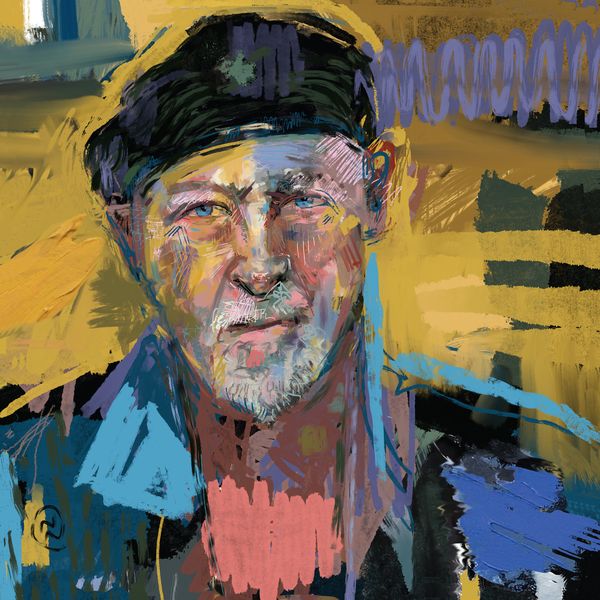
Beverley Martyn, had historical associations with that name yet she was in fact her own woman. A lady who went through much but came out of difficult times with her head held high and her musical spirit intact. Simon Jones pays tribute to an artist of singular courage.
Though known as Beverley Martyn, Beverley was in fact Beverley Kutner and she was born in Coventry in March 1947. She grew up to love acting in her teenage years, before attending Corona Drama School in London alongside such names as Dennis Waterman, Fraser Hines and Francesca Annis, however the folk boom was starting to boom very loudly and in no time she fell in with the singers and strummers of Greek Sreet. Once hooked on the music and potential of the 1960s counter culture pretty soon she was part of a blues/jug band with Johnny Joyce known as The Levee Breakers. When she gradutaed from drama school though the RSC was intended, the attraction of music proved too strong. She began hanging around with Bert Jansch, inspiring him to write and that’s her on the cover of his ‘It Don’t Bother Me’ album. The Levee Breakers stuck out a single in 1965 which increased her profile and gave her the confidence to sign with agent Denny Cordell.
Cordell got her a deal as a soloist with Deram – Decca’s progressive off shoot label, it’s also a rearrangement of the word dream, very 1960s – her first single under her new monicker, Beverley, had amongst its session musicians Jimmy Page, John Paul Jones and Nicky Hopkins. A follow up of a song by Donovan was shelved, although her third visit to the recording studio cut a version of Donavan’s ‘Museum’ that was issued in 1967. In the giddy social swirl of the folk scene she’d taken up with Paul Simon. Along with Art Garfunkel he whisked her off to America for half a year where she got to perform at the Monterey Pop Festival and generally experience The Summer Of Love. On her return to the UK it was Joe Boyd who rescued her career, he was the hip svengali of acoustic and rock music with a diverse portfolio Pink Floyd, Incredible String Band, Fairport Convention. It was fortunate. Not long after plans were laid for her to record a full album, Boyd having been more than chuffed with the demo she’d recorded for him, but then things took a turn: she met John Martyn.
To say that he derailed her forward progress would be somewhat of an understatement. All began well, they’d falllen in love and he’d offered to play guitar on her upcoming record, she duly reported the fact to Boyd who retorted her new boyfriend was a “bad scene.” They married however and jetted off to the States. Gradually over the ensuing weeks her solo album became a duo record, ‘Stormbringer’ recorded with Paul Harris, Harvey Brooks and Levon Helm of The Band bore the titles John & Beverley Martyn. Laid down in Woodstock around the same time as the festival things seemed ideal, they played a few gigs and even got to meet Bob Dylan, though that caused a ruckus, the first of many to come. Returning home at the end of the summer their work found critical appreciation so they began working on a second album later in 1970. That was ‘The Road To Ruin’ a strangely prophetic title as now John was dominating the recording sessions so much so that Joe Boyd took to reading the paper when he should have been producing. Beverley’s contributions were tellingly reduced. In fact it was the last recording to bear her name for twenty eight years.
The ensuing story is best chronicled in her own book ‘Sweet Honesty’ a frank, forthright, disturbing but necessary work which is strong stuff. To summarise, Beverley endured both physical and mental abuse, her career disappeared, she basically stayed at home and raised the family whilst John Martyn’s career rocketed. Beverley endured incidents of frequent control and manipulation before she summoned up the courage to instigate a divorce which eventually came in 1980. It took a lot longer though to get her musical mojo back.
Though it was to her credit that she never truly gave up, tenacity saw her support Loudon Wainwright and play Glastonbury in 1981, she took to jamming with the very affable Wilko Johnson. Moving to Brighton in the early 1990s she began gigging again both locally and in the capital, some with old flame Bert Jansch and ran open mic nights helping new singer songwriters to find their feet. She formed a duo with multi instrumentalist Nick Pym and even got The Levee Breakers back together for one final hurrah. By 1998 she had enough material to commence an album that bore her name proudly across the top. ‘No Frills’ described the contents perfectly, a delightful set which she promoted through a series of interviews and articles with the music press. She gained further exposure when Fat Boy Slim sampled ‘Primrose Hill’ from ‘Road To Ruin’ for an album in 2004, in 2013 she was part of a tribute to Bert Jansch at The Royal Festival Hall. Her second album came on the back of her revival with her biography and benefitted from classy musicians and a proper budget. ‘The Phoenix & The Turtle’ also contained a track she’d composed with Nick Drake back in the early 70s titled ‘Reckless Jane’ it was strong enough to open the record.
As part of Record Store Day 2018, the Decca archives were raided to issue an album that should by rights have been released some fifty years earlier ‘Where The Good Times Are’ a pleasing collection of her folk pop, Cordell era material which included not only the chaps from Led Zeppelin but also Alan White and John Renbourn, which spoke volumes as they’re the kind of guys who don’t just back anyone. Thankfully it’s still available.
Beverley Martyn left us on April 26th, she fell asleep at home and passed peacefully. For much of her life she’d been left in the shadows but thankfully she always had the ability to rise again no matter how low she felt. It’s pointless to speculate on what might have been, though there is no doubt if fate had been kinder her star could have shone considerably. Ultimately hers was a story of bravery and determination and the very personification of the phrase ‘ you can’t keep a good woman down.’
Photo credit: Wesley Kutner.