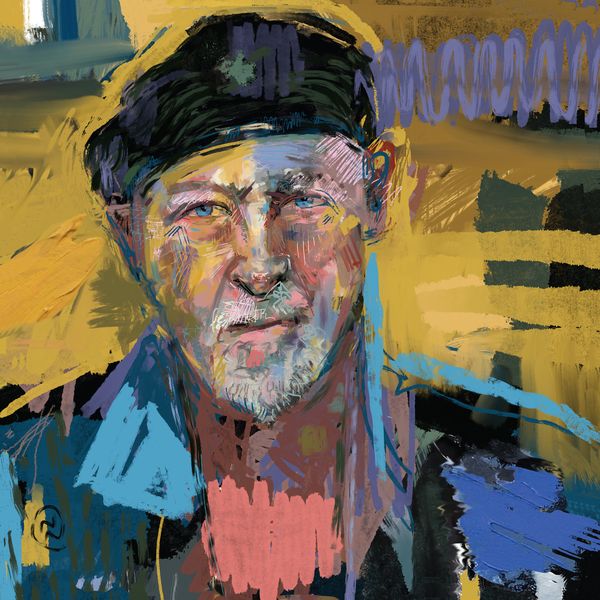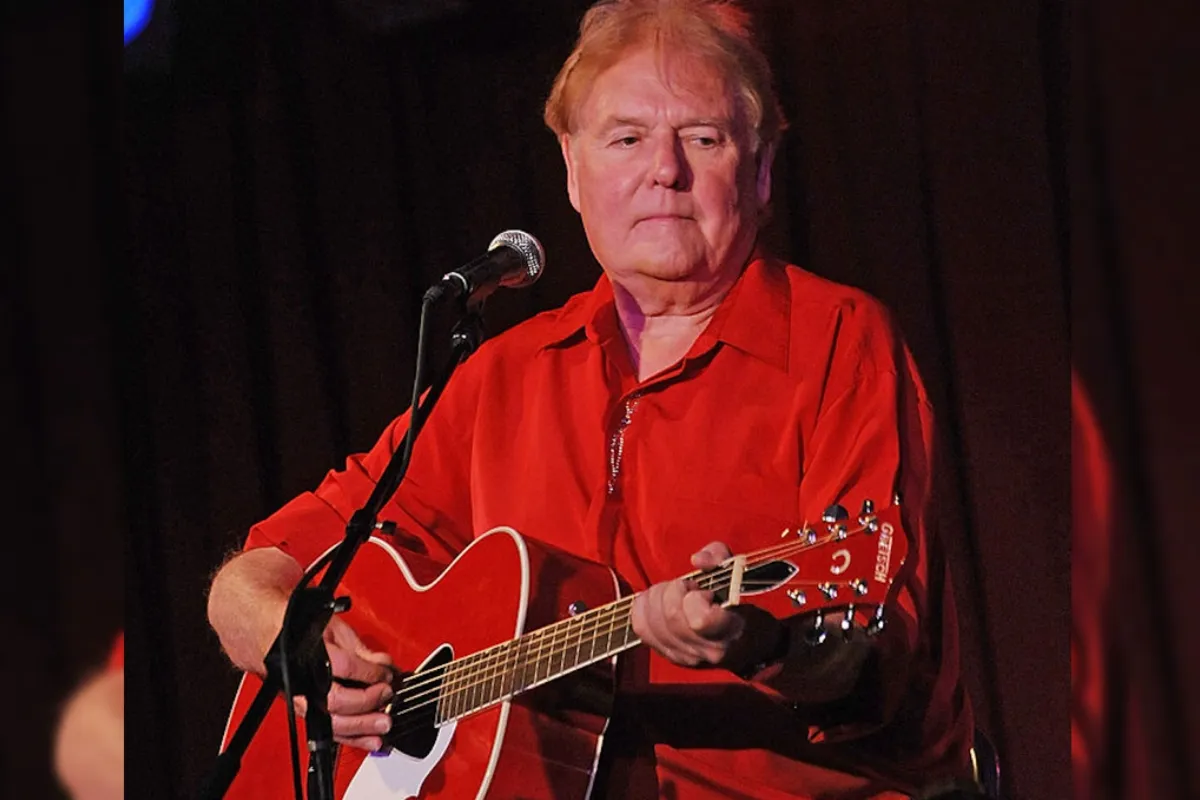
Dave Cousins the founder, guitarist, and singer of the English folk and progressive rock band, The Strawbs has passed away after a long illness at the age of 85. Lyndon Noon recalls a life well lived by a real character and craftsman.
Entirely self-taught as a banjo player and initially influenced by Bob Dylan and Flatt and Scruggs, Dave Cousins learned how to play ‘Foggy Mountain Breakdown’ and Appalachian bluegrass music as part of the Strawberry Hill Boys in the late sixties. Cousins became renowned for his fast banjo-picking, inimitable vocals and a haunting compositional style. He gradually developed his own tunings on guitar, dulcimer and banjo which gave his songs their own unique flavour.
Playing folk music was extremely popular in the pubs and clubs during the band’s early years, but what made the Strawberry Hill Boys unique was that nobody else was playing bluegrass music in the U.K. A big part of the scene in London at the time was The Troubadour in Earls Court. This was the venue where on a fateful Tuesday night Dave Cousins came across an 18 years old Sandy Denny. He recalled: “She was sitting on a stool wearing a white dress, a white straw hat, with long blond hair singing like an angel.” After her performance an enraptured Cousins was moved to introduce himself immediately and offer her a place in The Strawbs (as his group was now called.)
Already a regular on the BBC’s popular radio show The Saturday Club the addition of Denny led to an offer from a small record label in Denmark – of all places – to record their debut album. Featuring an early version of Denny’s classic “Who Knows Where The Time Goes” and recorded in just a week, Cousins was then given the task of hawking it around trying to get an English label interested. There were no takers. Cousins lamented: “If that album had come out at the time we’d had have a couple of hit singles and Sandy would have become the equivalent of Dusty Springfield. She was magnificent and could have gone in that direction.” Sadly, the record remained in the vaults for years. After a few short months with the band and concerned that The Strawbs were headed in a more commercial direction, Denny jumped ship and joined Fairport Convention.
Cousins bore no rancour with Denny and they remained good friends until her untimely death after a tragic accident in the late 70s. He reflected: “Every record we make is a natural evolution, with who’s in the band at the time, and the frame of mind of the band at the time. We never sit down and say ‘We’re going to be a prog rock band this week, and next week we’ll be a pop band, and then an ambient band. We just evolve album by album.’”
The first British band to be signed to A&M, though difficult to classify The Strawbs gradually moved from folk-rock (a term Cousins hated) into progressive rock over a series of four albums with each release gaining a fervent and substantial following. Though some critics found his style somewhat earnest, songs like ‘The Man Who Called Himself Jesus’ and ‘I Turn My Face To The Wind’ nevertheless established him as a storyteller with an ambitious musical landscape that encompassed medieval and classical music.
The arrival of prodigious keyboard wizard Rick Wakeman in 1970 broadened the Strawbs musical horizons and took the band into a period of change. Augmenting Cousins’ ever improving electric guitar playing the arrival of a rock rhythm section saw the band dip their toes into Progressive Rock territory and a period of commercial success. Though he had a relatively short tenure with the band – he left after just one year – Wakeman’s influence and reputation saw the band’s visibility sky-rocket.
With former Amen Corner keyboardist Blue Weaver on board the band dispensed with their folk roots and became a fully-fledged rock band for 1972’s ‘Grave New World’. Given the full treatment by their record company with a sumptuous fold out sleeve the album reflected what was happening in mainland Britain at the time. The IRA were setting off bombs in small towns and central London and the violence was reflected in Cousins’ lyrics. A far cry from their bluegrass roots it struck a chord with the public who ushered the album into the UK Top 20 and importantly the US album charts.
Keen to capitalise on the momentum created, 1973’s ‘Bursting At The Seams’ powered its way into the album charts thanks in part to their breakthrough hit single ‘Lay Down’. It was a diverse, accessible and well-arranged collection that mixed mainstream rock – ‘Lady Fuchsia’ – with echoes of their more complex past, ‘The River’. The downside for Cousin’s was the satirical hit single ‘Part Of The Union’. Totally at odds with rest of the album, it was almost a novelty tune that was appropriated by trade union activists who completely misunderstood the message it belied.
 Mr. Cousins bends those melancholy English strings.
1974 saw the Strawbs release two of their finest albums and two of their most successful thanks to North American audiences. The epic album ‘Hero and Heroine’ went Gold in Canada and made the US Top 50 as well, though sadly it didn’t receive the recognition it deserved back home, probably due to its overt drug references. In contrast to its predecessor ‘Ghosts’ released later that same year was a less bombastic affair but it still found an audience, appreciating a subtle approach it was to be their last chart record before the storm clouds of punk swept them away as the 70s rolled on.
Dave Cousins maintained that had they stayed with A&M Records as he wanted the band would have had continued success. Regrettably management hassles saw the band sign with Polydor in 1976 and things were never quite the same again.
In 1980 Dave Cousins quit the band and took a new career path as programme controller with Radio Tees. Considering he had no experience in that field it was a remarkable move. Over the next 20 years he worked for many broadcasters in increasingly senior roles and became an expert at applying for and winning independent radio licenses.
After a 20 year hiatus he returned to music founding a boutique label. Witchwood Media released a long line of Strawbs albums together with his own solo and collaborative projects and amassed over 110,000 in sales.
A career that spanned over 50 years is an amazing achievement especially in the cut throat world of the music business. During that time, he remained true to his ideals and his lyrics demonstrated his lust for life and concerns for his fellow man. A special talent whose passing will be mourned by music lovers everywhere.